Brand Ownership for Marketplace Sellers, Built into Seller Center
Connecting Walmart sellers and brand owners through a unified brand experience
This project addresses a critical adoption gap in Walmart’s seller ecosystem by bringing Brand Portal capabilities directly into Seller Center—where sellers already work.
By unifying fragmented workflows into a single experience, the solution improves discoverability, increases engagement, and drives cross-platform adoption.
Role: Product design lead - Solo designer
Scope: Seller Center · Brand Portal · Walmart Connect · Marketplace Learn
Timeline: 1 month
Responsibilities
Reviewed and refined PRDs to ensure clarity, feasibility, and alignment with user needs
Facilitated cross-functional discussions across product, engineering, and stakeholders
Aligned perspectives and drove decision-making on product direction
Conducted research to identify gaps in tool adoption, user behavior, and workflow fragmentation
Synthesized insights to inform product strategy and experience design
Drove AI-driven enhancements to improve content optimization and reduce manual effort, enabling intelligent recommendations within the seller workflow
Identified opportunities to integrate intelligent recommendations into the brand experience
Translated discussions and insights into scalable design solutions
Iterated designs based on continuous feedback and evolving requirements
Presented final design solutions to stakeholders for alignment
Project Goal:
Currently, Sellers have to get authorization from the brand owner to be able to purchase advertising in Brand Portal. Some sellers work across Seller Center and Brand Portal or they might not even know the process that has to be taken in Brand Portal, such as that brand verification is a prerequisite for ad buys. The project goal is to help sellers purchase advertising by enabling them to get brand authorization within Seller Center while also introducing Brand Portal to them and increasing awareness of brand requirements for Marketplace sellers.
Key Objectives
Increase awareness of Brand Portal and brand requirements for advertising eligibility
Enable sellers to register brands or request brand authorization without leaving Seller Center
Reduce friction in accessing advertising tools
Create a unified workflow for brand management and advertising readiness
Drive business outcomes by increasing ad participation and optimization
Problem
Sellers and brand owners were missing out on critical brand tools by not knowing how to purchase advertising.
Key Issues
Brand tools (IP claims, analytics, content optimization) lived in a separate Brand Portal
Low awareness + low adoption of brand programs
Sellers stayed in Seller Center → rarely navigated to Brand Portal
Brand ownership workflows were fragmented across systems
Sellers sometimes do not adopt tools that require leaving their primary workflow
Result:
Lost opportunity for brand growth
Poor IP protection usage
Underutilized analytics & optimization tools
Solution
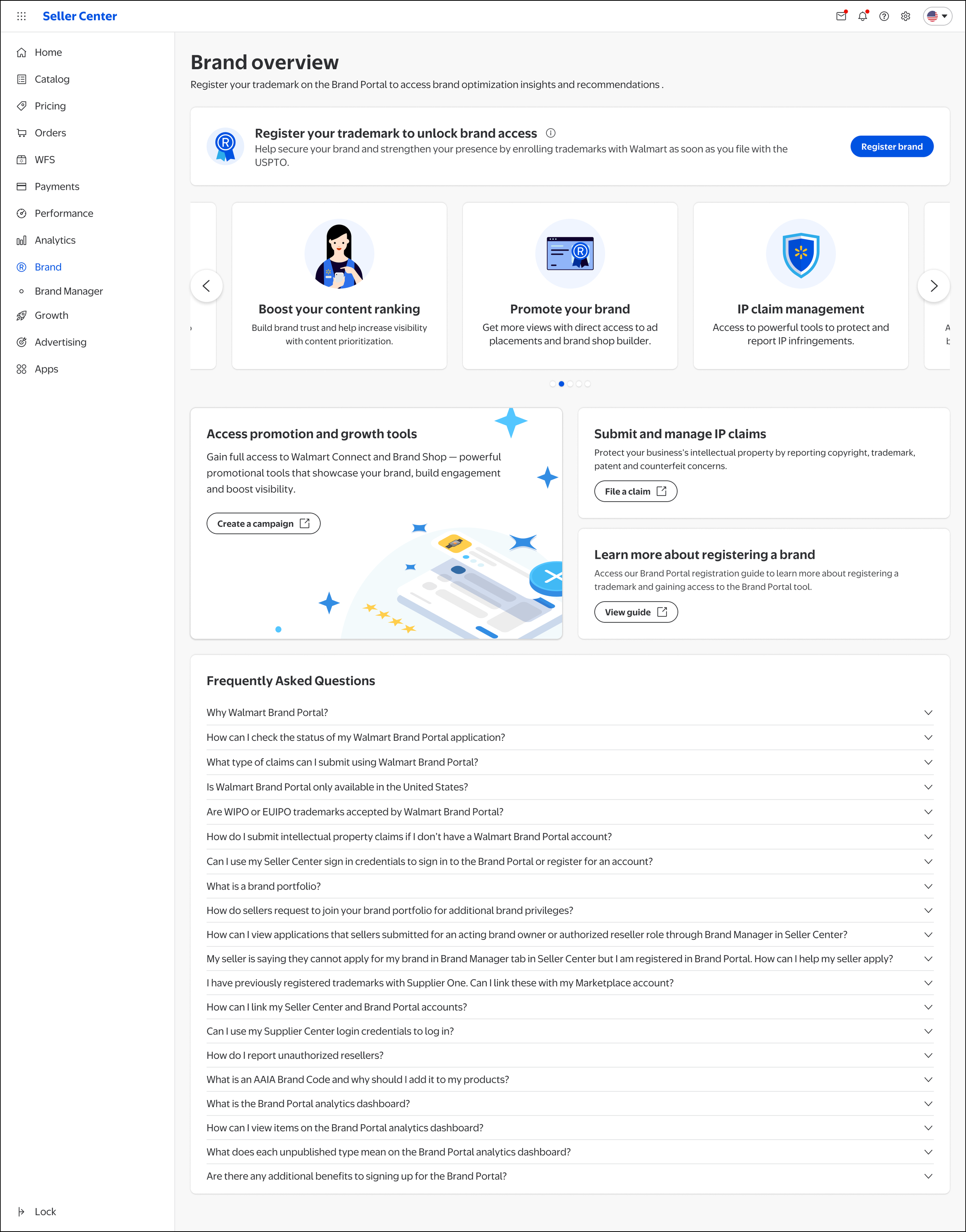
Introduced a new “Brand” top-level category (L1) as a new page in Seller Center
This acts as a central hub for:
Brand onboarding (trademark registration)
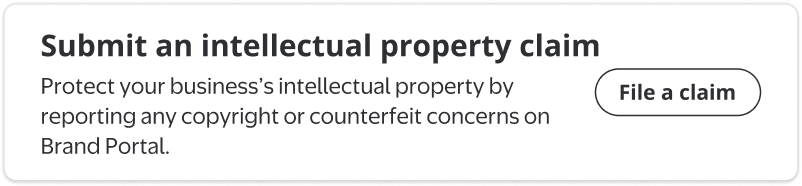
IP claim management
Content optimization tools
Advertising entry points
Analytics & insights
Reviews & reputation management
Instead of forcing users to go elsewhere, we brought the ecosystem to them
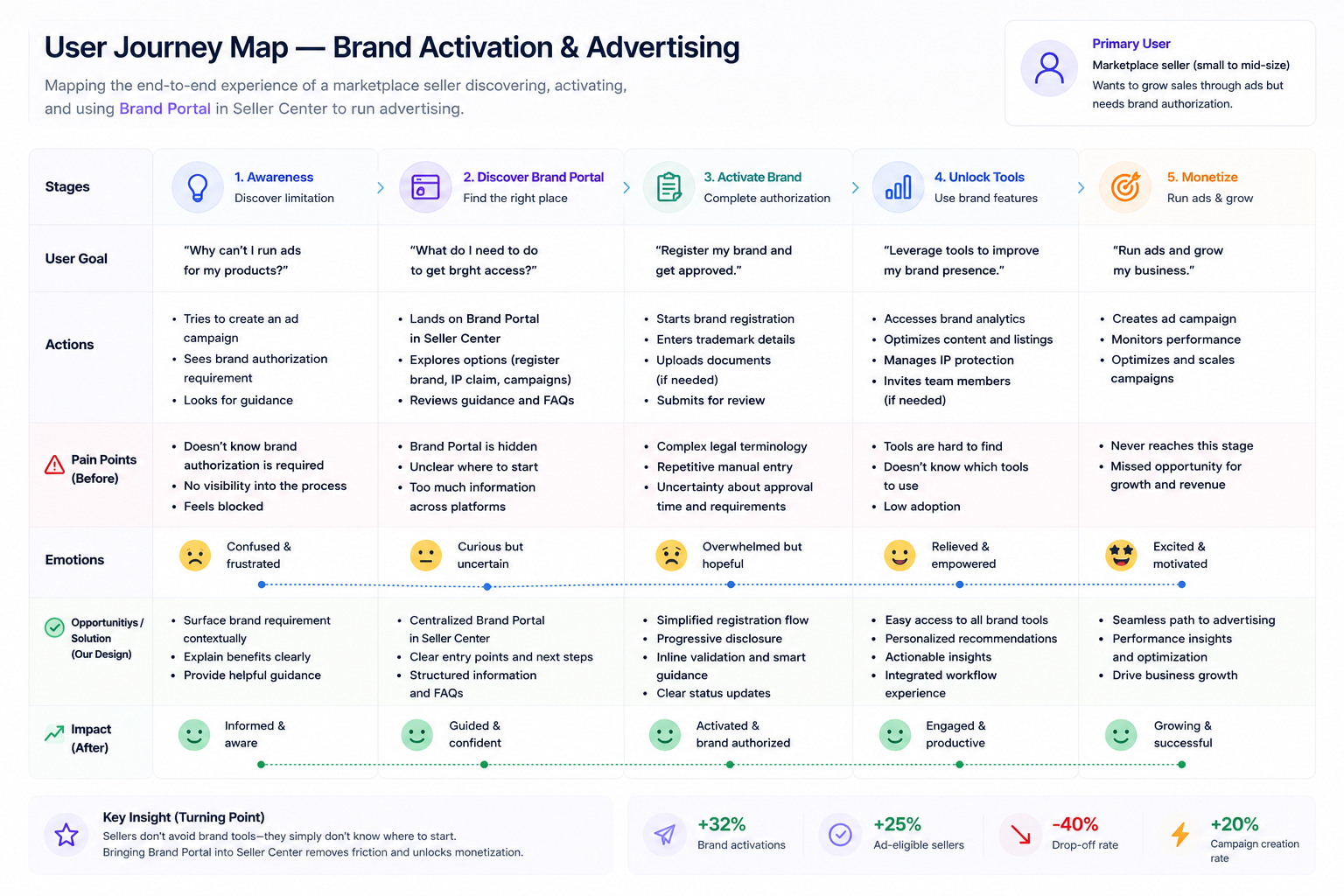
+28%
Increase in brand activation
Conversion & Adoption
+15%
Increase in ad-eligible sellers
-40%
Drop-off in registration flow
+18%
Increase in campaign creation
Key Insight
Sellers weren’t blocked by a complex registration process—they were blocked much earlier by invisibility and fragmented workflows. Brand authorization lived outside Seller Center, so most sellers never discovered it, never started it, and never became eligible to run ads.
By embedding Brand Portal directly into Seller Center, the experience shifted from a hidden prerequisite to a natural, guided step within the seller’s existing workflow. This eliminated context switching, surfaced requirements at the right moment, and reduced uncertainty through clearer guidance, validation, and status visibility.
More importantly, the problem reframed from a usability issue to an activation and adoption challenge. Instead of optimizing individual features, the focus became enabling sellers to progress through a critical business milestone—brand authorization.
This shift unlocked downstream behaviors: higher activation rates, more ad-eligible sellers, increased campaign creation, and ultimately stronger revenue contribution across the platform.

Early-Stage Sellers
Designed for new sellers who are just getting started, no Brand Portal account, no registered brand, or no content optimization tools yet.

Established Sellers
Designed for established sellers who have a Brand Portal account, a registered brand, or actively use content optimization tools.

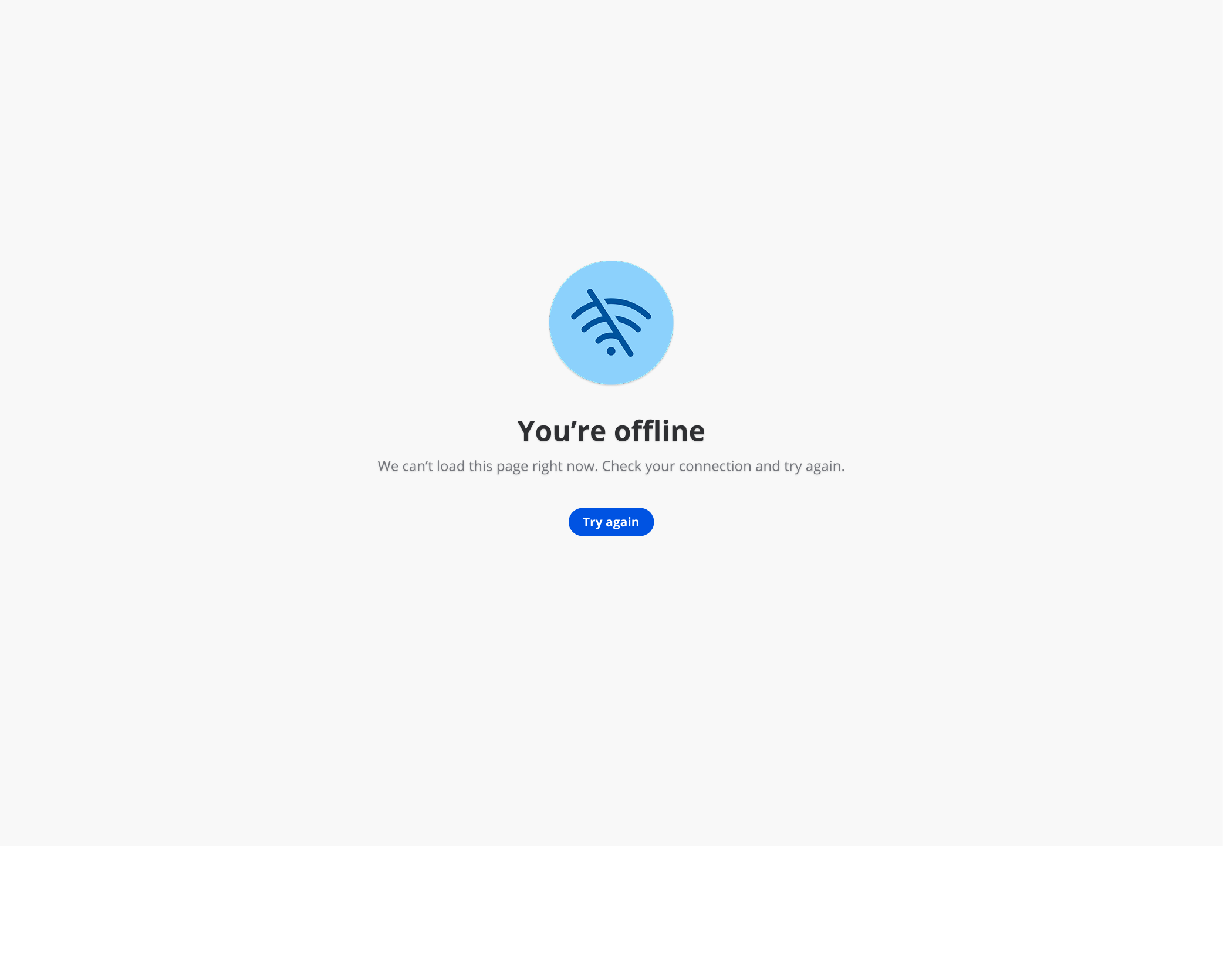
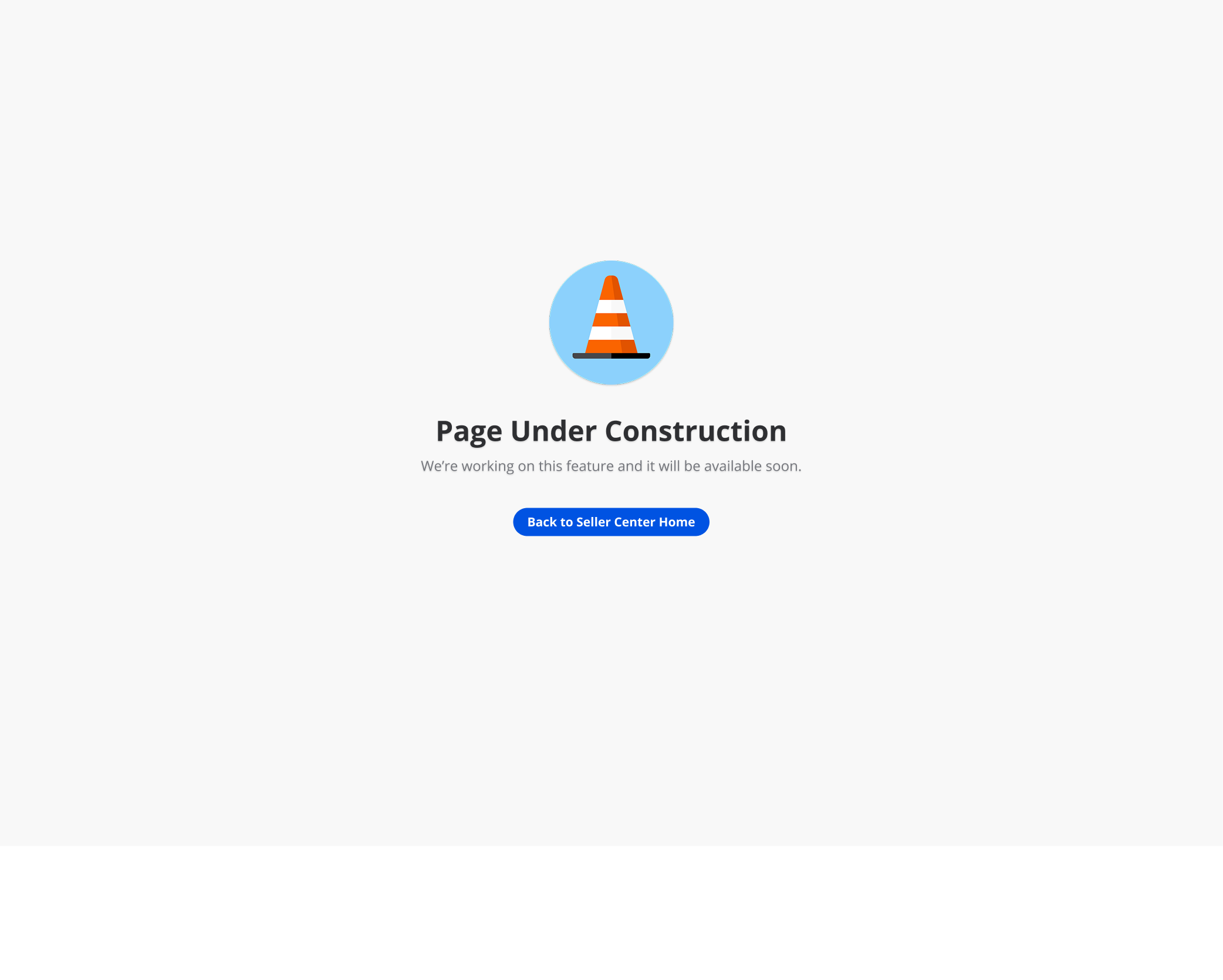
Service or Data Unavailable
Designed a clear error state for situations where brand data cannot be loaded due to a service disruption or connection issue.
Research & Insights
Due to tight timelines, I did not conduct formal user interviews. Instead, I leveraged multiple sources to understand user needs and pain points:
Reviewed existing seller feedback and support tickets related to brand authorization and advertising access
Analyzed user behavior and drop-off points in current workflows
Collaborated with PMs and cross-functional partners to gather insights from prior initiatives
Identified friction through product flows where sellers were blocked from accessing advertising
These insights revealed a key gap:
Many sellers were unaware of Brand Portal and did not understand the steps required to gain brand authorization, which prevented them from accessing advertising features.
Outcome
Designed for a platform serving 100K+ Marketplace sellers within a billion-dollar revenue business, this experience removed a key barrier that prevented sellers from accessing essential growth tools.
By integrating brand registration and authorization directly into Seller Center, sellers were able to complete critical workflows in one place, reducing friction and improving efficiency.
This enabled more sellers to take action faster and participate more effectively in revenue-generating activities across the platform.
Designer Insights:
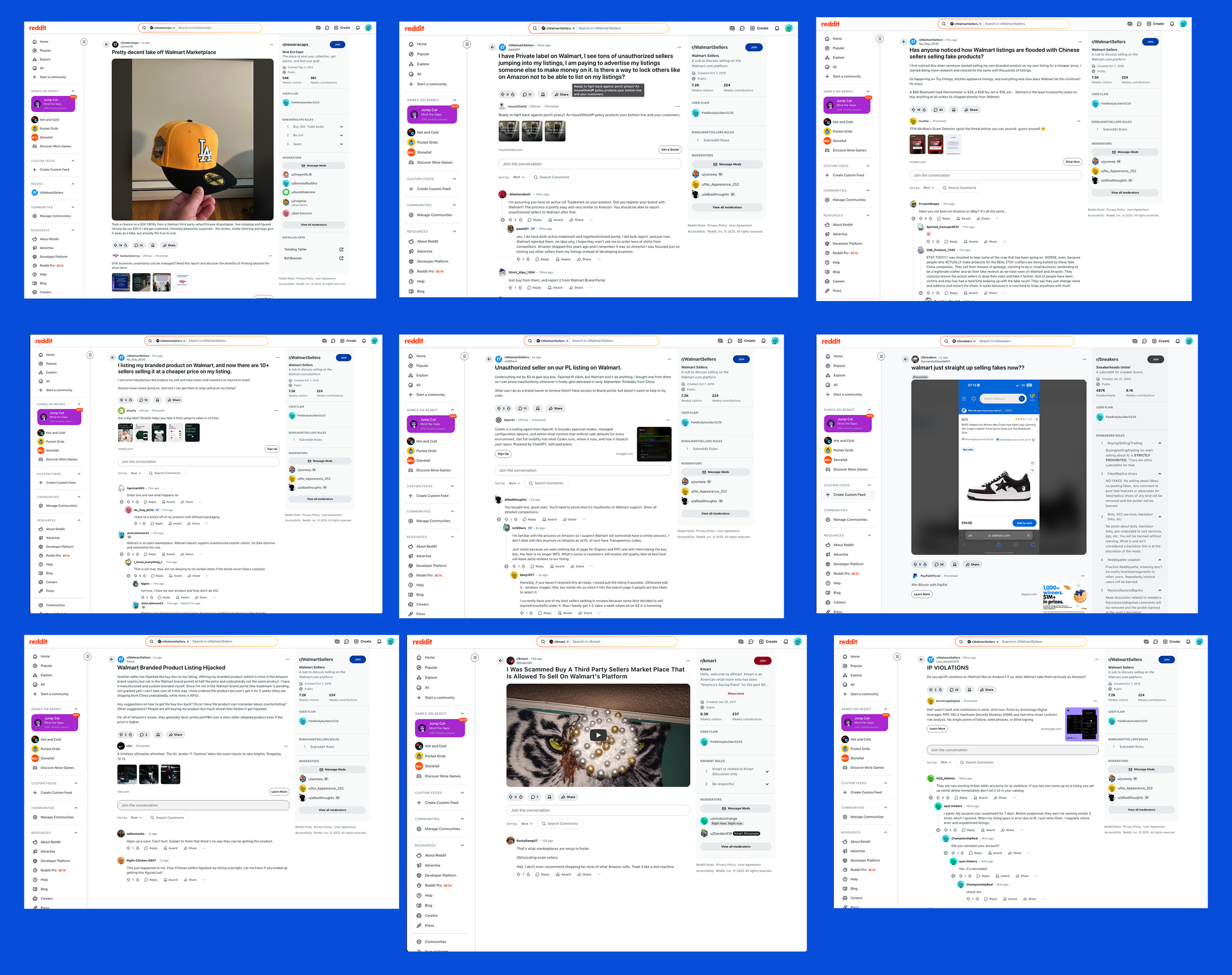
User Signals from the Marketplace
This collection highlights real seller and customer discussions from online communities, where users report counterfeit products, unauthorized listings, and a lack of clear ways to take action.
Many sellers expressed frustration with not being able to report violations or protect their brands, often seeking help outside the platform.
These signals reveal a critical gap in Seller Center: brand protection tools existed but were not visible or accessible within sellers’ daily workflows.
Sellers had the need to take action, but no clear path to do so within Seller Center. This is a way to protect against counterfeit products from being listed.